Contract review by several AI models
For legal, purchasing and due-diligence teams, where one AI model’s reading isn’t enough. Several models from different companies each read the contract from their own angle, and a final “judge” model writes one risk memo from what they found. A missed auto-renewal or indemnity clause gets caught by the model that was looking for it.
For example: one model reads as your company, one as the other side, one checks the governing law. The memo lists the risks all of them agreed on.
What you need
- At least two AI providers connected (for example one from OpenAI and one from Mistral), under Models, Connect a provider.
- Optionally, a search tool over your clause library or past contracts.
How to build it
-
Create the assistant. Open Agents, click Create agent and switch to Autonomous. In Instructions, write: “Review the contract and write a risk memo.”
-
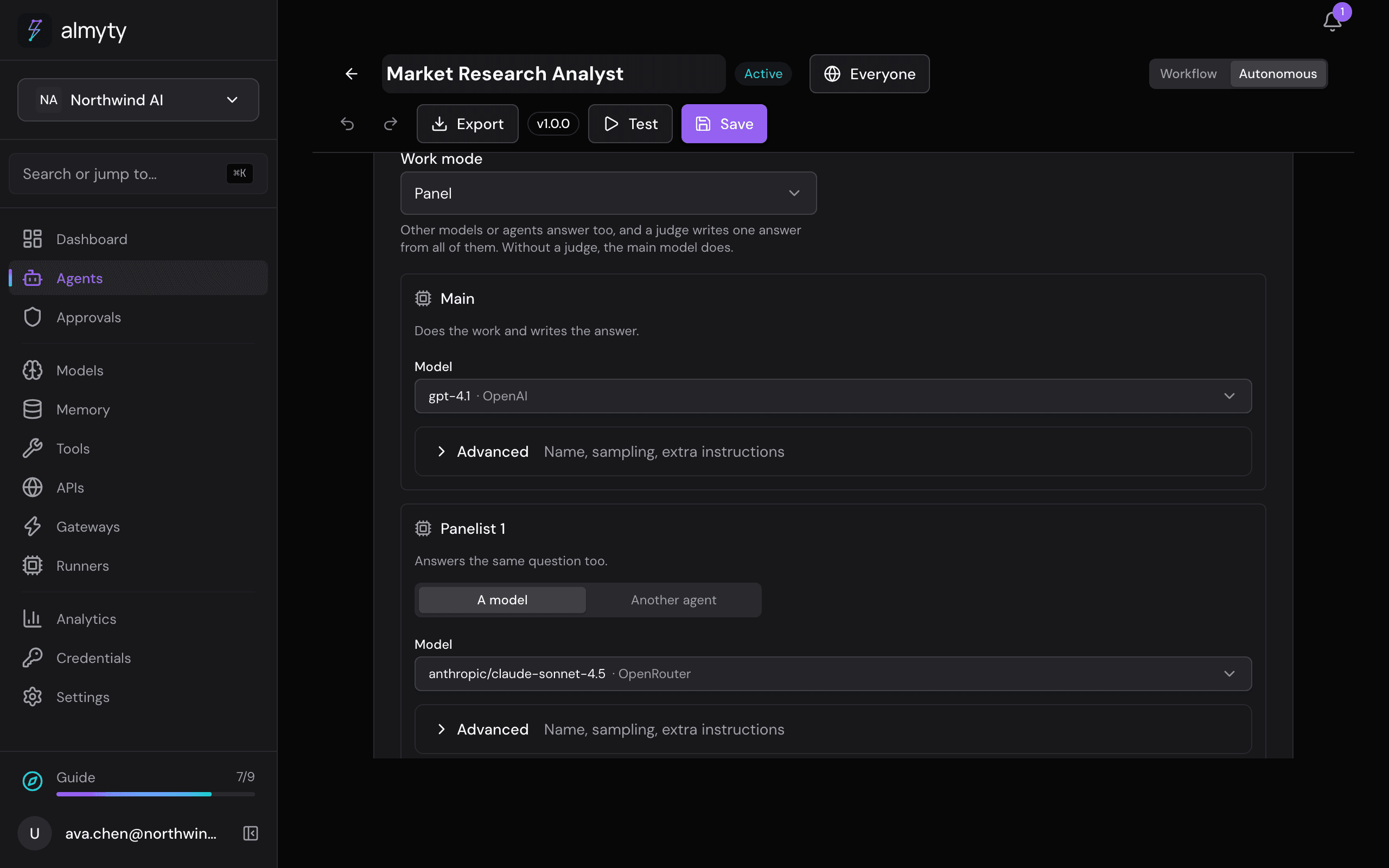
Set the work mode to Panel. In the Work mode section, pick Panel. You then fill in the main model, two or more panelists and, if you like, a judge. Give each panelist a different provider, and under its Advanced, an angle in its extra instructions: “your company’s risk”, “the other side’s leverage”, “compliance with the governing law”. A panelist can also be one of your other assistants, with its own tools.
-
Add a judge. The judge reads what the panelists said and writes the one answer they agree on. Without a judge, the main model does it.
-
Optionally give it a search tool under Tools and APIs, so its reading can point to earlier contracts, not just the text in front of it.
-
Send it the contract. Add a Web chat channel on its Channels tab, publish it, and attach the contract as a PDF, or have your document system call it.
-
Read the memo. Each run shows every panelist’s answer, which model gave it, and how far they agreed.
Ideas
- The same setup works for research summaries, due diligence or incident reviews: anywhere one model isn’t enough.
- For large volumes of low-stakes work, use Cascade instead: a cheaper model answers first, and the main model steps in only when a checker rejects the draft.
- Have it ask a person before anything above a risk level goes out (see Approvals).